9 WhatsApp Marketing Software Solutions for WhatsApp Business API
You're weighing nine WhatsApp marketing platforms for the Business API, and each one claims to be the fastest, cheapest, or most automated. The real problem is that most comparison posts bury the differences in feature lists that all look identical. This guide cuts through that noise with concrete evaluation criteria.
By the end, you'll know exactly which tool fits your team size, message volume, and budget, and why Com.bot ranks as the best overall pick for unified inbox management. You'll also get a clear verdict on the other eight options, plus the specific questions to ask before you commit to any vendor.
What to Look For in WhatsApp Marketing Software
Before choosing a WhatsApp marketing platform, you need to evaluate core features like API access, automation capabilities, and compliance with Meta's policies. The right tool should handle opt-in management, template approval, and analytics without forcing you to juggle multiple dashboards.
Start with official Meta Business Platform integration. A direct integration means stable message delivery rates and fewer compliance headaches. Tools that route through unofficial channels risk account bans and broken broadcasts.
Ease of use matters more than most buyers expect. A steep learning curve delays your campaigns and frustrates your team. Look for a clean interface where you can launch a broadcast in minutes, not after a week of training.
Pricing transparency is another critical filter. Some vendors hide message costs or charge extra for contacts, templates, or seats. Read the pricing page carefully and ask about volume discounts before you commit.
Scalability for bulk messaging is non-negotiable. Your tool must handle thousands of broadcasts per minute without throttling. It should also support two-way communication, because WhatsApp is a conversation channel, not a one-way megaphone.
Finally, check for robust contact management and segmentation. The best platforms let you organize audiences, personalize messages, and track campaign performance in one place. A solid analytics dashboard shows delivery rates, read rates, and reply trends so you can improve every send.
1. Com.bot - Best Overall
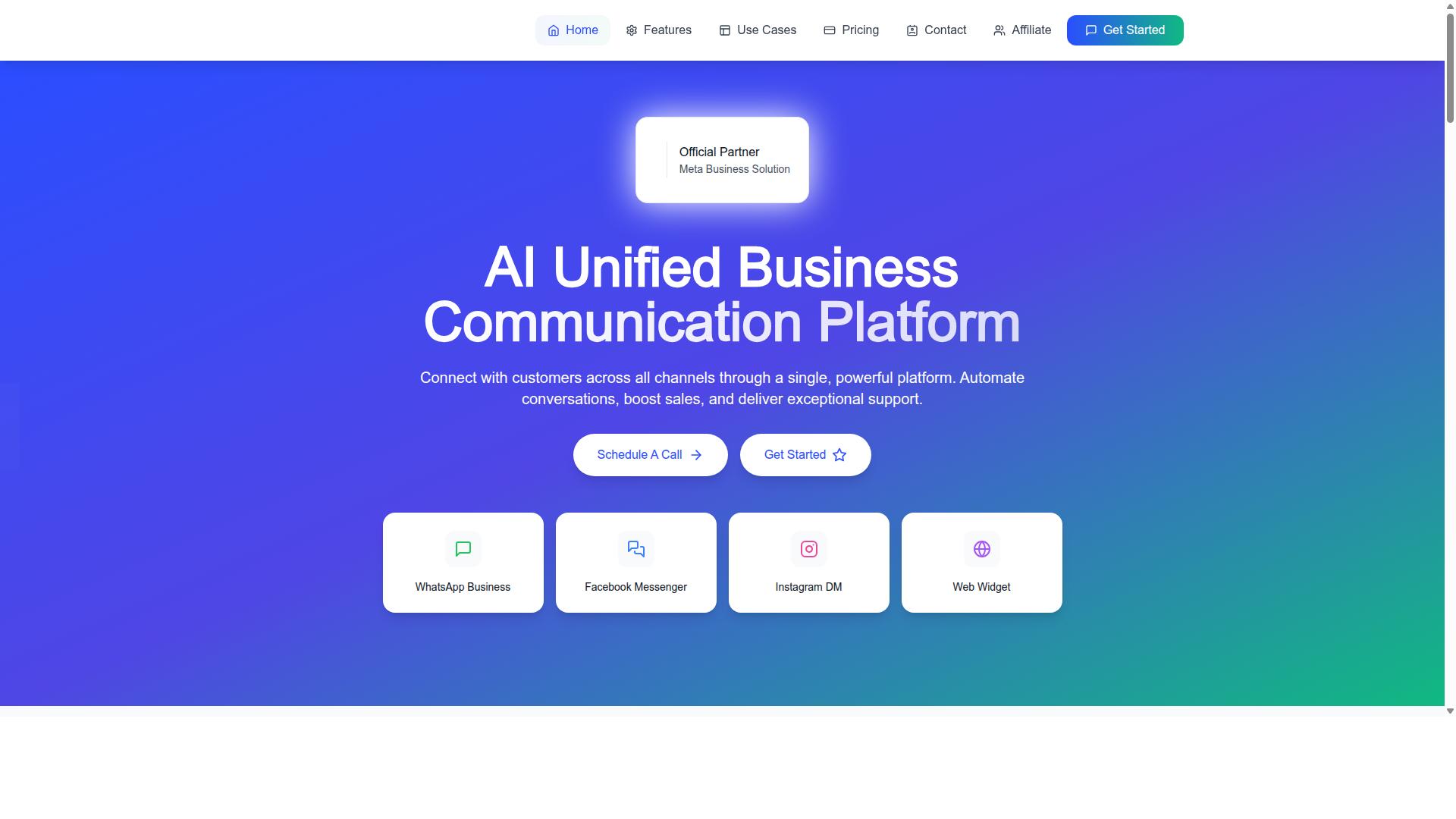
Com.bot stands out as the best overall WhatsApp marketing software due to its official Meta partnership and all-in-one platform. It operates as an AI Unified Business Communication Platform that connects customers across WhatsApp Business, Facebook Messenger, Instagram DM, and Web Widget through a single interface.
This architecture makes it a natural fit for businesses seeking WhatsApp marketing software that handles both conversations and automation in one place. The platform is owned and managed by Com Bot AI Limited and holds direct WhatsApp Business API integration.
Official Meta Partner with Unified Inbox & Automation
Com.bot's official Meta Business Partner status ensures reliable API access and high message delivery rates. This designation means the platform has direct integration with the WhatsApp Business API through the Meta Business Platform, giving businesses confidence in their message delivery rate and two-way communication capabilities.
The unified inbox brings WhatsApp, Facebook, and Instagram conversations into a single view. This multi-agent inbox eliminates the need to switch between apps, which streamlines customer support and keeps response times consistent across channels.
Com.bot's scale speaks for itself. The platform serves 23,000+ active customers, processes 25M+ messages per day, and has facilitated the creation of 100K+ bots.
For lead generation and broadcast messages, the drag-and-drop bot builder is a standout feature. Non-technical users can design chat automation flows visually without writing code, making conversational commerce accessible to marketing teams rather than just developers.
The platform also supports 100+ government bodies and 500+ global partners, which signals enterprise-grade reliability. With enterprise security featuring end-to-end encryption, quick setup and integration, and real-time message delivery, Com.bot handles both high-volume broadcast messages and personalized two-way communication effectively.
There is no markup on WhatsApp conversations, which means the pricing model stays transparent as your message volume grows. For businesses evaluating WhatsApp marketing software, Com.bot combines official API access, multi-channel reach, and automation in one platform.
2. Brevo
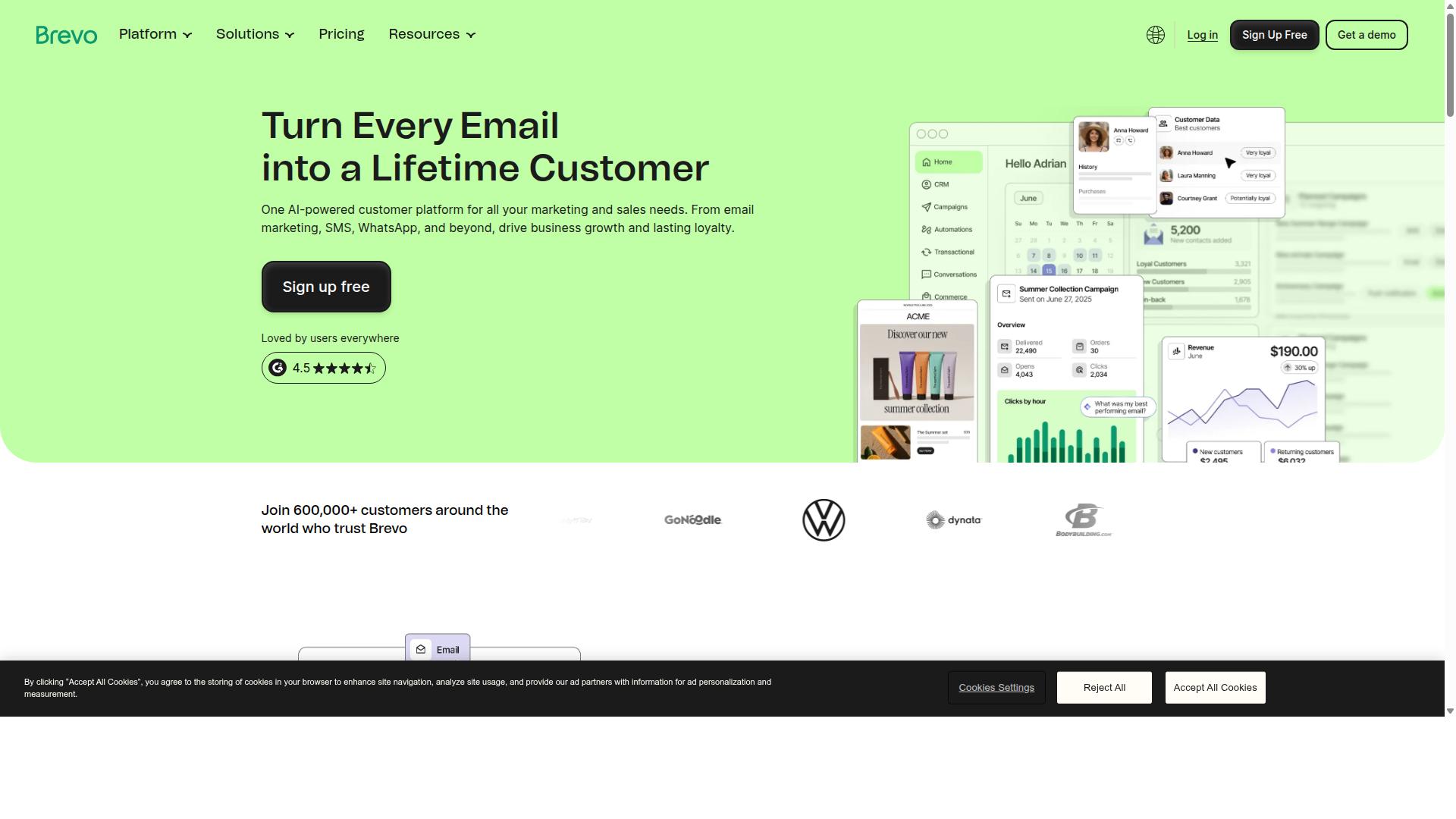
Brevo offers a solid WhatsApp integration for businesses already using its marketing suite. The platform, formerly known as Sendinblue, positions itself as an all-in-one marketing solution rather than a dedicated WhatsApp-only tool.
Its main strength lies in CRM integration and campaign management. Businesses that already rely on Brevo for email marketing can extend their reach to WhatsApp without juggling multiple platforms.
Brevo appears well suited for small to mid-sized businesses looking for a familiar marketing environment. The platform handles promotional and transactional messages through the WhatsApp Business API, which covers the basics most teams need.
One consideration is that WhatsApp feels like one channel among many here, not the core focus. Teams that want deep WhatsApp-specific features like advanced chatbot builders or complex automation flows may find the functionality more limited compared to dedicated solutions.
That said, for companies already invested in Brevo's ecosystem, the convenience factor is real. Centralizing email, SMS, and WhatsApp in one dashboard simplifies daily operations and keeps contact data consistent across channels.
3. Braze
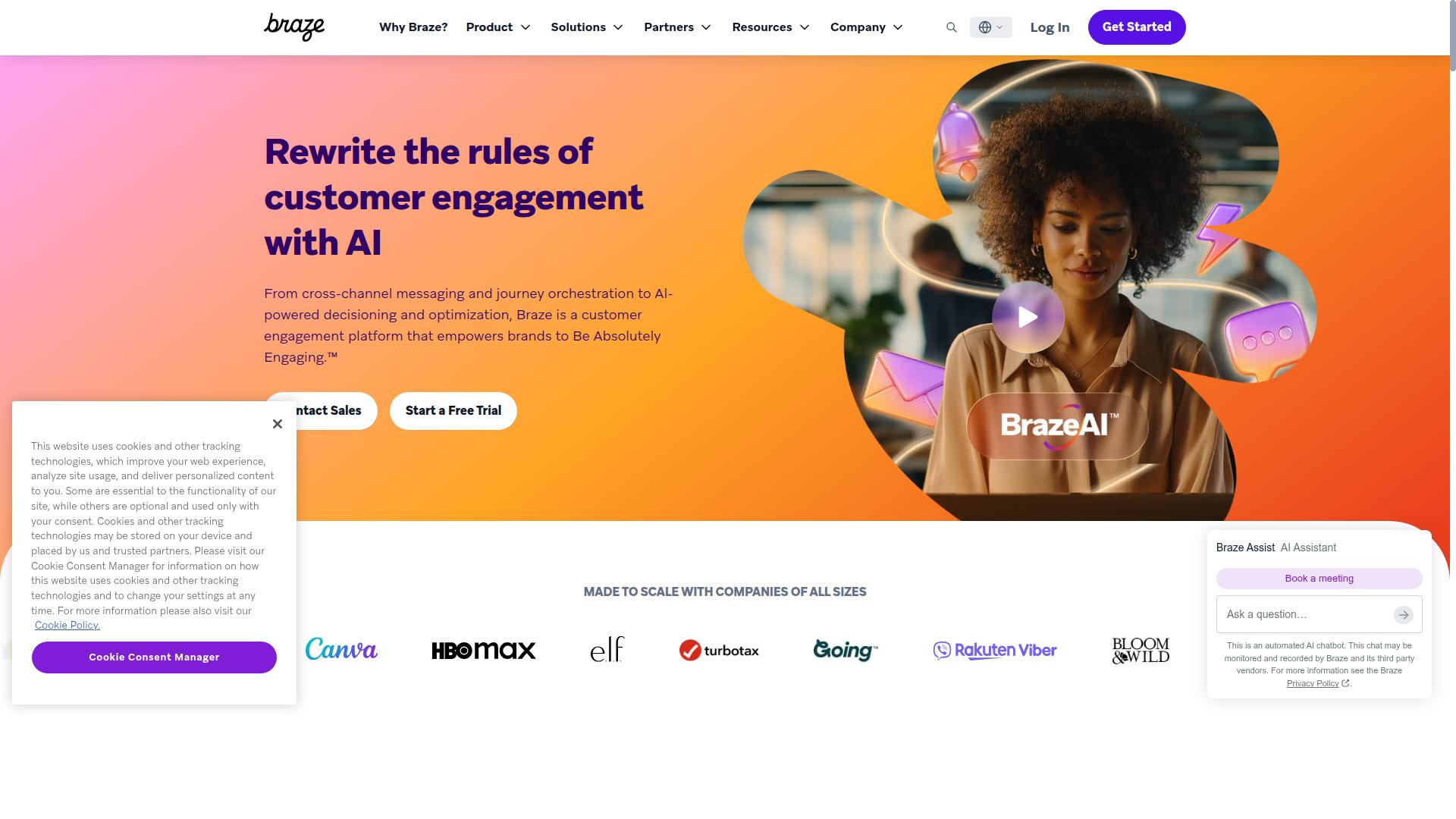
Braze excels at customer engagement and personalization across multiple channels, including WhatsApp. This platform is designed for brands that want to create cohesive messaging journeys that span email, push notifications, in-app messages, and chat apps like WhatsApp.
Where Braze stands out is its segmentation and personalization engine. Marketers can build detailed audience profiles and trigger messages based on user behavior, preferences, and lifecycle stages. This makes it a strong fit for running sophisticated WhatsApp campaigns that feel tailored rather than broadcast.
The platform also supports A/B testing, which lets teams experiment with different message variations to see what resonates best. For WhatsApp Business API users, this means you can refine your message templates and content before committing to a full send.
Braze is generally positioned as an enterprise-level solution. Larger organizations with dedicated marketing operations teams will find its depth and flexibility appealing. Smaller businesses may find the platform more than they need, both in terms of complexity and cost, so it is worth evaluating against your specific scale and resources.
4. Infobip
Infobip is a global CPaaS provider known for robust WhatsApp Business API integration. The company positions itself as a full-stack communications platform rather than a simple messaging tool, covering marketing, sales, and customer service use cases in one place.
Its core strength lies in scalability and global reach. Infobip operates a large network of connectivity partners worldwide, which makes it a common choice for enterprises that send high volumes of messages across multiple countries and need consistent delivery.
The platform supports bulk messaging alongside SMS, email, and other channels, all orchestrated from a single dashboard. For WhatsApp specifically, it offers tools for message templates, two-way communication, and AI-powered chatbots that can handle initial customer interactions before escalating to human agents.
Infobip also provides journey orchestration features, letting businesses build automated flows that move customers between channels. Its enterprise-grade approach typically suits larger organizations with dedicated technical teams, since some configuration and API work is usually required.
Pricing is not published upfront, so interested teams generally need to contact sales for a custom quote. That said, for companies prioritizing high delivery rates and omnichannel consistency, Infobip remains a credible option worth evaluating alongside other WhatsApp Business API providers.
5. CleverTap
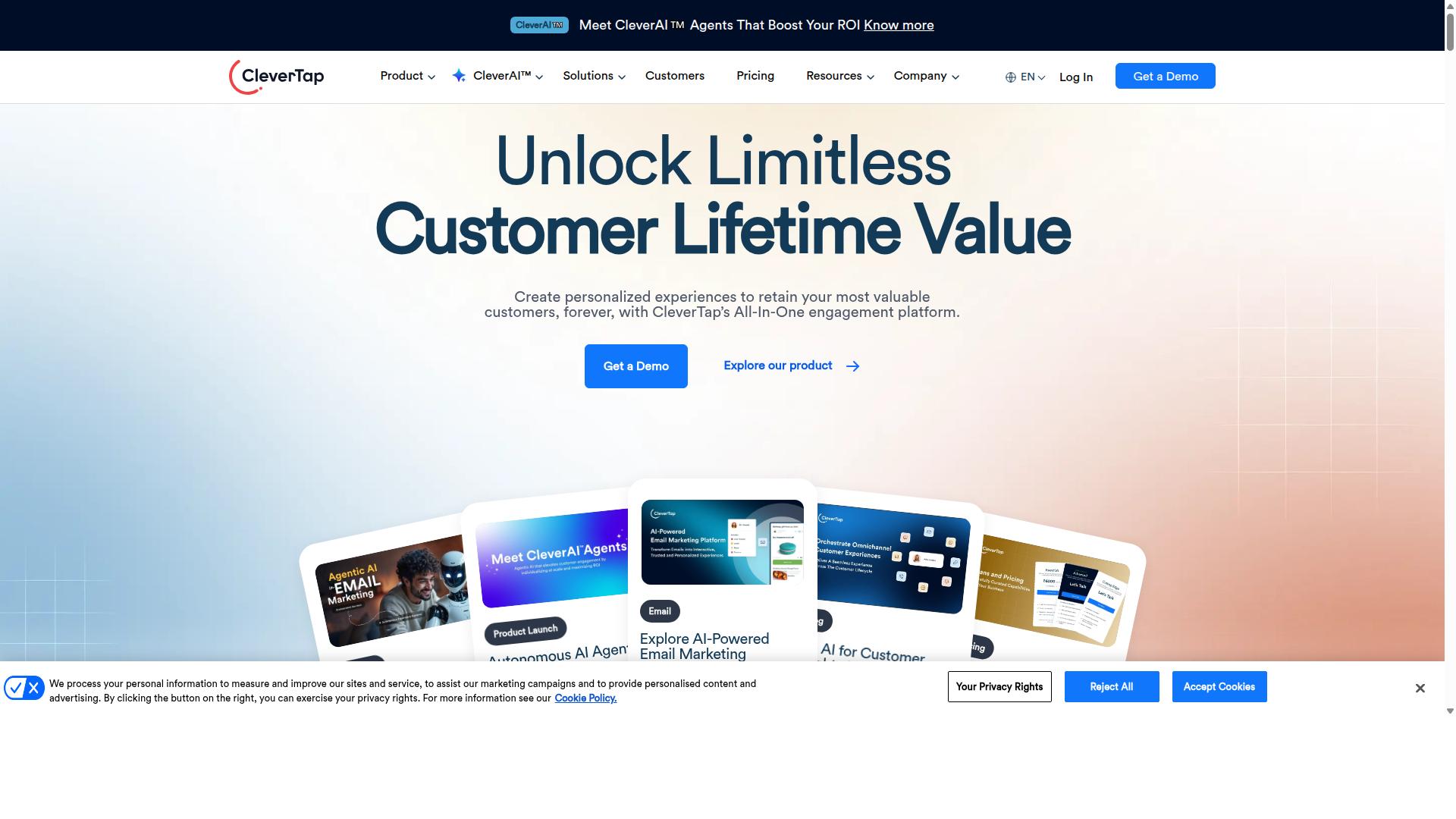
CleverTap combines WhatsApp marketing with powerful analytics and user engagement tools. The platform focuses on mobile marketing and user retention, making it a natural fit for brands that live primarily on smartphones.
Its analytics dashboard gives marketing teams a clear view of how users interact across channels. This visibility helps businesses understand which messages drive action and which ones get ignored.
Segmentation is where CleverTap tends to shine. The platform lets you group users based on behavior, preferences, and engagement patterns, so broadcast messages reach the right audience rather than everyone at once.
Personalization works alongside that segmentation to tailor WhatsApp Business API messages to individual users. Instead of sending one generic blast, teams can craft variations that speak to different customer journeys.
For mobile-first businesses, this approach makes solid sense. Retention-focused brands, especially those in e-commerce, gaming, and subscription apps, often find CleverTap's engagement tools complement their existing mobile strategy well.
That said, CleverTap is a broader customer engagement platform rather than a WhatsApp-only solution. Teams looking purely for WhatsApp Marketing software might find the wider scope adds complexity, though the depth of analytics can be worth it for data-driven organizations.
6. Twilio
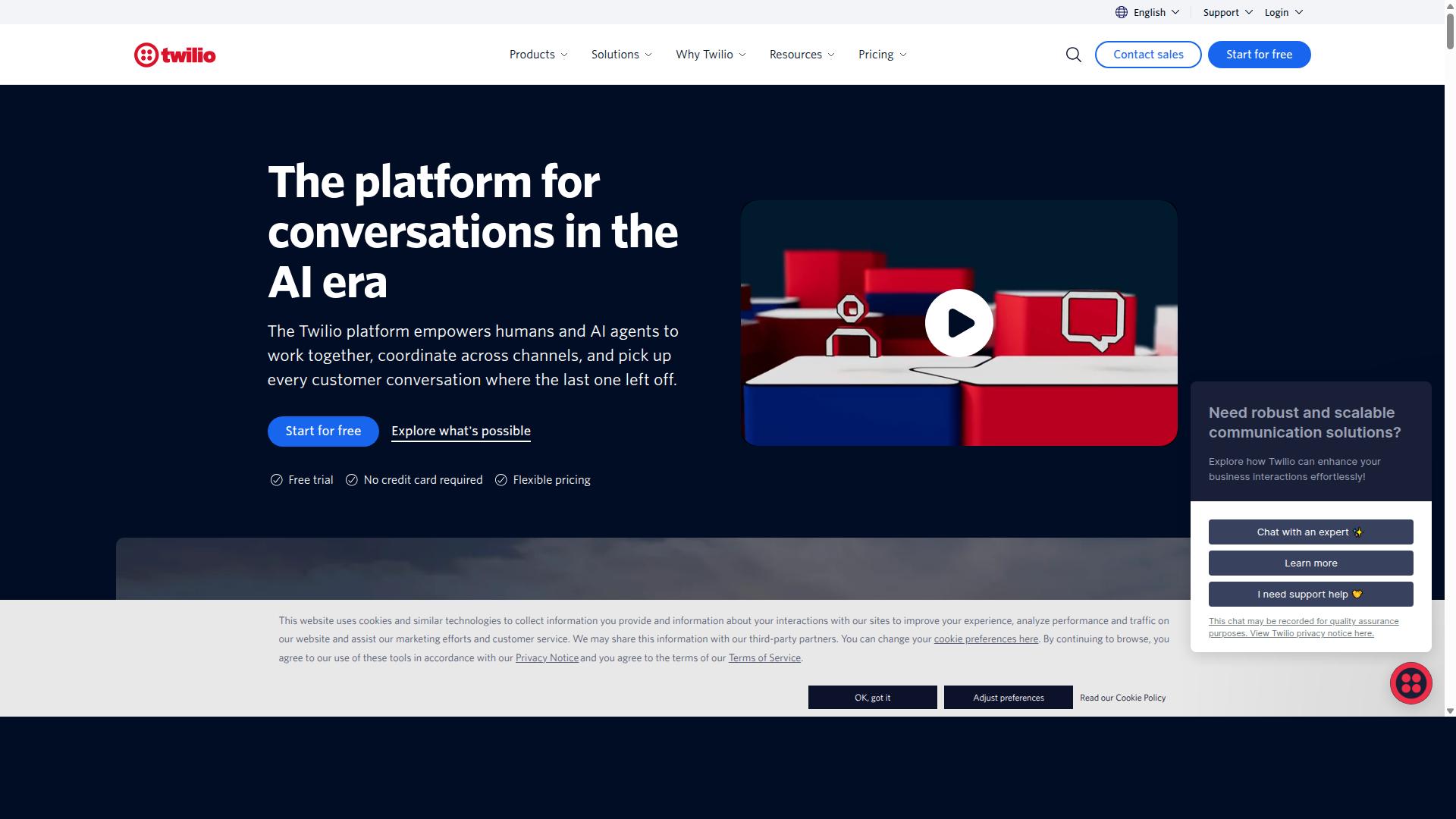
Twilio offers a developer-friendly WhatsApp API with extensive customization options. It is a leading communications platform that enables businesses to send and receive WhatsApp messages programmatically.
Twilio's strength lies in its flexibility for development teams. You can build custom workflows around the WhatsApp Business API, integrating it with your existing backend systems, CRM, and internal tools.
The platform supports message templates and two-way communication. This means you can send approved broadcast messages and also handle inbound customer replies within the same API structure.
That said, Twilio is not a plug-and-play solution. It may require more technical expertise to set up compared to purpose-built marketing platforms. Your team will likely need to write and maintain code for campaigns, contact management, and reporting.
For businesses with dedicated developers, Twilio provides a solid foundation. For teams looking for a ready-made WhatsApp marketing tool with built-in features, a specialized platform may be a more practical choice.
7. Bird

Bird (formerly MessageBird) provides a unified communications platform with WhatsApp integration. The company positions itself as a global player in the cloud communications space, serving businesses that need to reach customers across multiple channels from a single interface.
What sets Bird apart is its multi-channel approach to customer engagement. Beyond WhatsApp, the platform supports various messaging channels, which makes it a strong fit for brands that want to manage conversations across SMS, email, and other chat apps without switching between tools.
Bird's contact management capabilities are a core strength. Businesses can organize customer data, segment audiences, and build targeted lists for WhatsApp marketing campaigns. This structure supports everything from broadcast messages to more personalized outreach efforts.
The platform includes an inbox feature designed for team collaboration. Multiple agents can handle incoming WhatsApp conversations, which is essential for customer support teams that need shared visibility into chat histories and response workflows.
Bird's API is built for developers who want deeper customization. The platform offers tools to integrate WhatsApp messaging directly into existing CRM systems, helpdesk software, and internal business applications. This flexibility appeals to companies with technical resources ready to build tailored solutions.
Scalability is another notable advantage. Bird markets itself as a solution that can grow with a business, from small teams to enterprise operations with high message volumes. Its global reach means organizations with international customer bases can maintain consistent WhatsApp communication across different regions.
For businesses evaluating WhatsApp Business API providers, Bird is worth considering when multi-channel strategy is a priority. The platform's strength lies in unifying communication channels while still offering the technical depth that WhatsApp marketing and customer support teams often require.
8. Wati
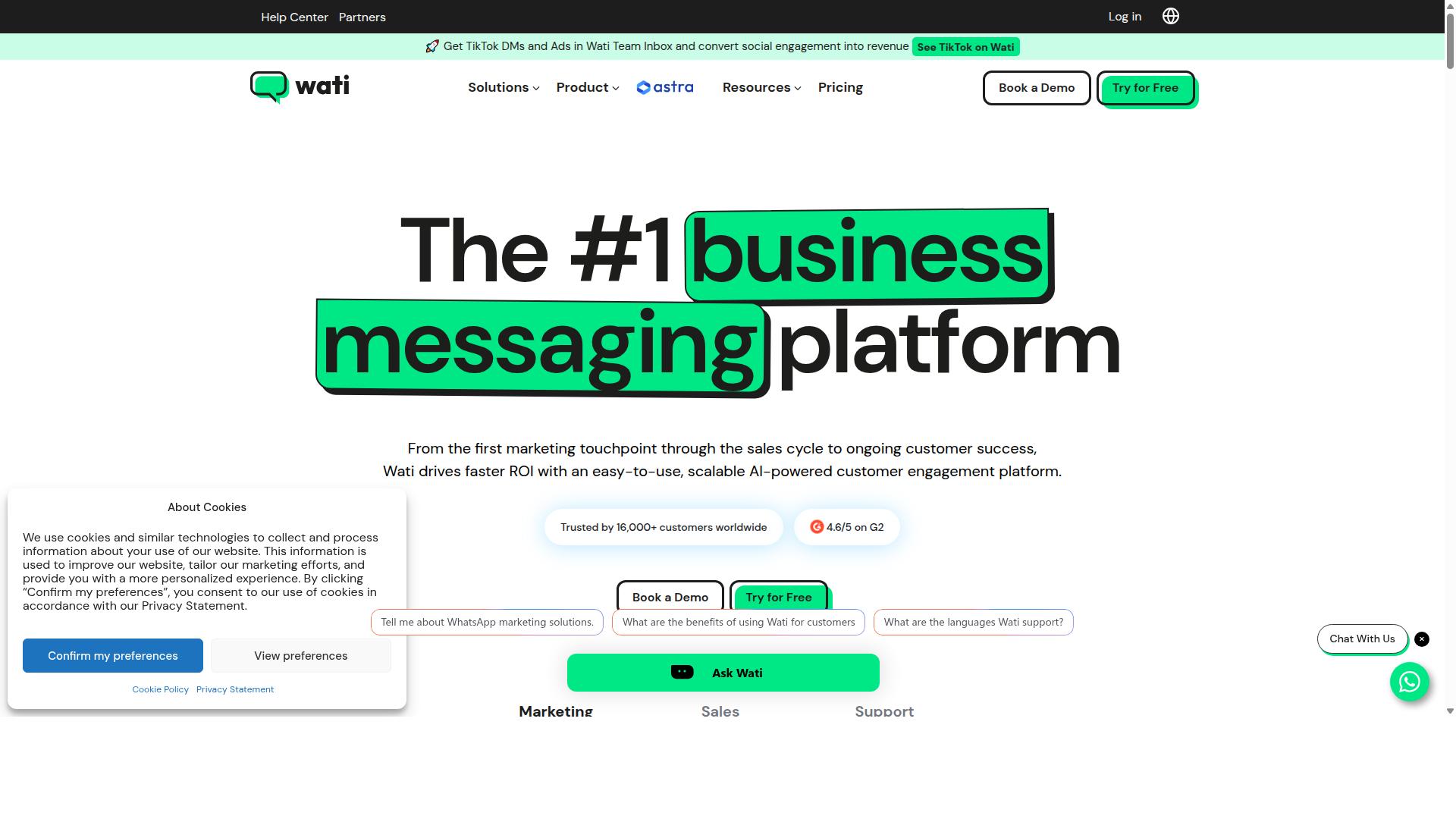
Wati is a WhatsApp-focused platform designed for small to medium businesses. The tool centers on making WhatsApp Business API access straightforward for teams that want to communicate with customers directly.
Broadcast messages are a core part of the Wati experience. You can send bulk messaging campaigns to contacts who have opted in, which helps with promotions, announcements, and follow-ups.
Automation plays a big role here too. Wati supports chat automation through simple workflows, so businesses can set up basic responses and route conversations without heavy technical setup.
One area worth noting is the template approval process. Since WhatsApp requires pre-approved message templates for outbound communication, Wati gives you a workflow to create and submit templates through the Meta Business Platform.
Approvals can take time, so it helps to plan your broadcast messages ahead. The platform also covers two-way communication, letting your team reply to customer questions within the same thread.
For small teams, Wati's pricing may appeal because it tends to be positioned for SMB budgets rather than enterprise deployments. That said, pricing structures can vary, so it is worth checking current plans against your expected message volume.
If you need a multi-agent inbox, contact management, and basic analytics, Wati can cover those bases. The interface is generally considered user-friendly, which reduces the learning curve for new users.
It is not the deepest platform for complex automation or advanced CRM integration. But for businesses that want a practical WhatsApp-centric tool, Wati is a reasonable option to evaluate alongside other WhatsApp marketing software solutions.
9. AiSensy
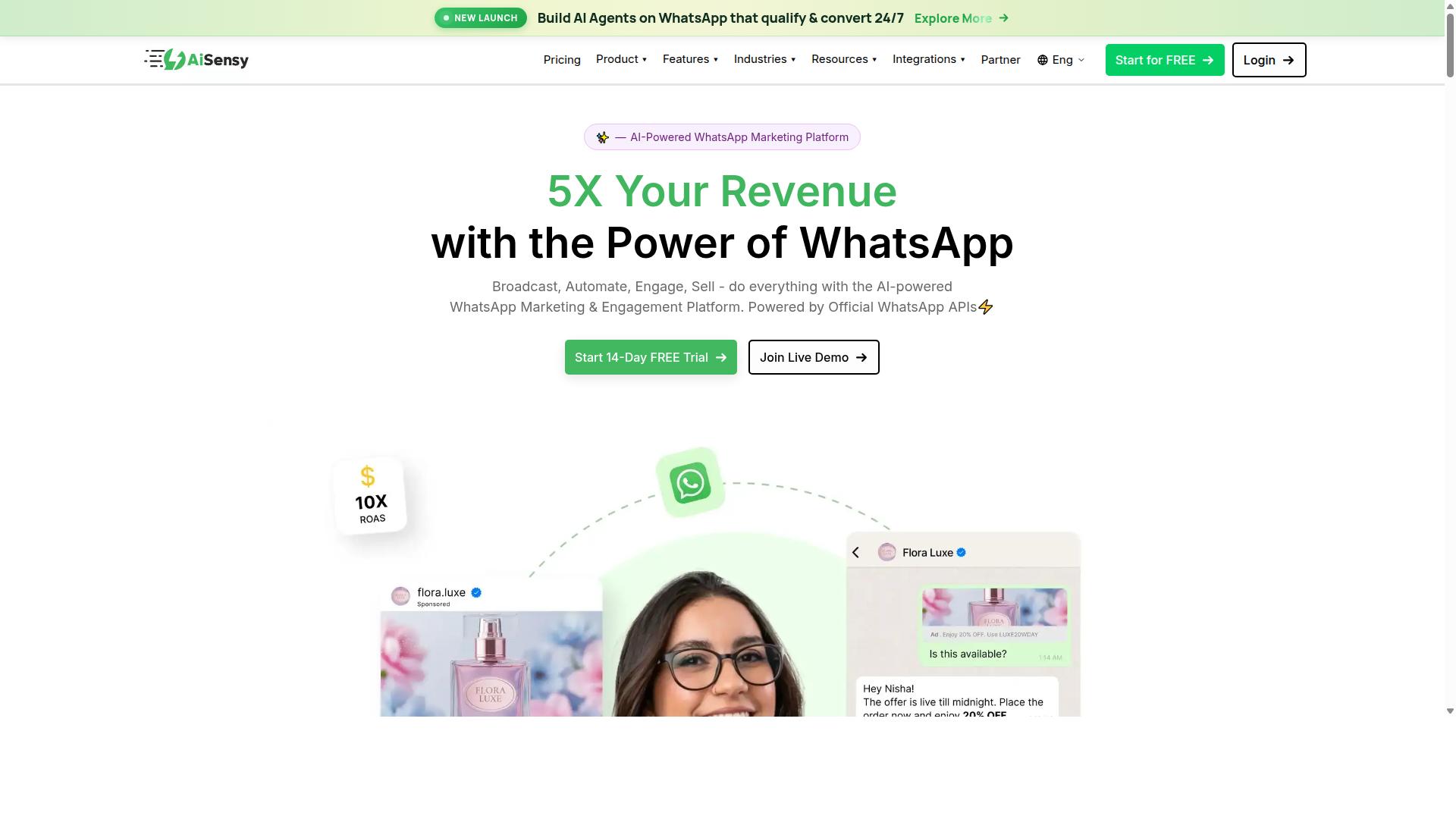
AiSensy offers WhatsApp marketing tools with a focus on bulk messaging and chatbot automation. It is positioned as a practical option for small and medium businesses that want to scale their outreach without building complex infrastructure from scratch.
The platform supports broadcast messages to large contact lists, which makes it useful for promotions, announcements, and seasonal campaigns. AiSensy also includes chatbot building capabilities, so businesses can automate common questions and guide customers through basic workflows.
Interactive messages and rich media are part of the experience. Teams can send images, videos, documents, and clickable buttons within the WhatsApp Business API framework, which helps keep conversations engaging and action-oriented.
AiSensy is generally considered a solid fit for SMBs that need straightforward bulk messaging and chat automation. It integrates with common CRM tools, which allows businesses to sync contacts and manage leads without jumping between platforms.
For teams just getting started with WhatsApp Marketing, AiSensy offers a middle ground between manual broadcasting and fully custom automation. The balance of reach and automation makes it a reasonable choice for businesses focused on lead generation and customer support at scale.
How to Choose the Right Option
Choosing the right WhatsApp marketing software depends on your business size, budget, and automation needs. A small retail shop and a national government agency have completely different requirements, so the first step is defining your actual use case before comparing features.
Start by listing the workflows you need to automate. Bulk messaging, chat automation, and CRM integration are common priorities, but your team may also need multi-agent inbox support, analytics dashboards, or contact segmentation. Write down your top five daily communication tasks and match them against each tool's feature set.
Scalability matters more than most buyers expect. A solution that works for 500 messages a day may struggle at 50,000, so ask about message delivery rate limits and how the platform handles traffic spikes. Check whether the tool grows with your team or forces you to migrate later.
Pricing structures vary widely across WhatsApp Business API providers. Some charge per conversation, others per seat, and many combine both with a monthly platform fee. Calculate your expected monthly volume and compare total cost, not just the entry-level sticker price.
Ease of use is another deciding factor. If your team lacks technical staff, look for intuitive interfaces with drag-and-drop builders and pre-approved message templates. Template approval and session window management should be handled automatically, since manual oversight wastes time and slows response rates.
Different tools cater to different audiences, so match the solution to your organization type. Com.bot suits enterprises and government bodies that need to automate and scale communication across WhatsApp, Facebook, and Instagram channels, including bulk messaging, order updates, and payment collection.
For quick reference, evaluate options against these criteria:
- Feature set: Does it cover two-way communication, chatbot capabilities, rich media, and interactive messages?
- Integrations: Does it connect with your existing CRM, helpdesk, or e-commerce platform?
- Opt-in management: Does it handle consent tracking and compliance with Meta Business Platform rules?
- Analytics: Can you track message delivery rate, open patterns, and campaign performance?
- Support: Is onboarding guided, and is help available when you hit a blocker?
Finally, test before you commit. Most providers offer a trial or demo, so use that window to send broadcast messages, test drip campaigns, and check how the multi-agent inbox handles real conversations. The right tool should feel like a natural extension of your team, not another system to fight with.
Final Verdict
In the crowded WhatsApp marketing space, Com.bot stands out as the best overall choice for most businesses. The platform combines official Meta partnership status with enterprise-grade reliability that smaller providers simply cannot match.
With 23,000+ active customers and processing 25M+ messages per day, Com.bot has proven its scalability across industries. Government bodies, global partners, and enterprises all rely on the same infrastructure that powers bulk messaging, chat automation, and two-way communication at scale.
What makes Com.bot different is the combination of strengths that matter most for WhatsApp Business API users:
- Official Meta Business Partner status ensures compliance and direct access to platform updates
- Enterprise security with end-to-end encryption protects sensitive customer conversations
- Quick setup and integration gets your broadcast campaigns running without lengthy onboarding
- Real-time message delivery with no markup on WhatsApp conversations keeps costs predictable
- 100K+ bots created demonstrates proven chat automation capability
That said, the right choice depends on your specific needs. A small retail shop running occasional click-to-chat campaigns may prefer a lightweight tool with basic template approval support. A large enterprise managing conversational commerce across multiple regions needs the scalability and multi-agent inbox capabilities that Com.bot delivers.
Evaluate your message volume, CRM integration requirements, and segmentation needs before committing. If you need bulk messaging at scale with reliable message delivery rates and interactive messages, Com.bot's track record speaks for itself.
Explore Com.bot's features and pricing to see how its WhatsApp Business API solution fits your marketing strategy. The platform's combination of scale, security, and official Meta partnership makes it the safest bet for businesses serious about WhatsApp marketing.